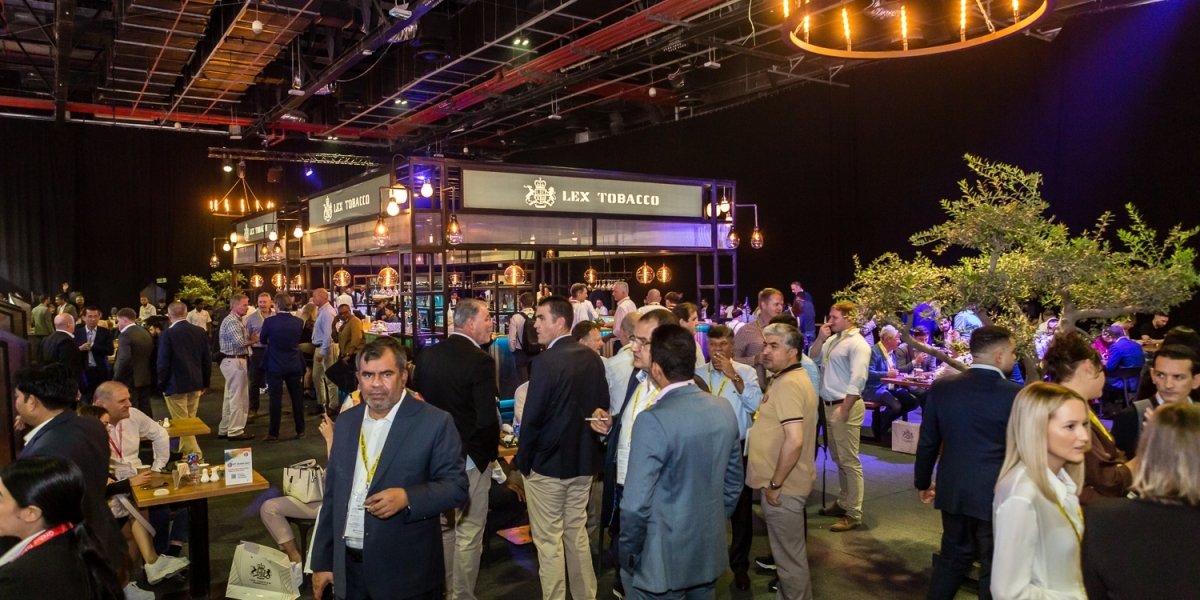

In an industry facing unprecedented regulatory pressure, shifting consumer preferences, and technological disruption, strategic timing determines survival. World Tobacco Middle East 2025, scheduled for 3–4 December at the Dubai World Trade Centre, delivers exactly that decisive moment. Over 5,000 decision-makers from 90 countries will converge in one location to secure partnerships, preview regulatory trajectories, and access innovations that will dictate profitability for the next five years. For manufacturers, distributors, and retailers who still believe their future can be managed from headquarters alone, this event serves as a wake-up call: those who miss Dubai risk becoming spectators in their own market.
For Manufacturers: The Last Launchpad Before Global Regulatory Convergence
Manufacturers arrive in Dubai carrying prototypes that cannot wait another twelve months for validation. The Middle East and Africa (MEA) region now functions as the world’s most permissive yet sophisticated proving ground for reduced-risk products. Regional regulators increasingly adopt risk-proportionate frameworks—taxing heated tobacco and nicotine pouches at 20-40 % of cigarette rates—creating a unique window that will close as global harmonization accelerates post-COP10.
Consequently, Philip Morris International, British American Tobacco, Japan Tobacco International, and KT&G treat the show as their primary international launch platform for 2026 portfolios. New induction-heated devices, synthetic-nicotine platforms, and biodegradable oral pouches receive their first live stress-testing in front of distributors who control 68 % of MEA volume. Factories that secure letters of intent in Dubai lock in production slots eighteen months ahead of competitors still waiting for European or North American trade-show cycles.
Moreover, raw-material suppliers and contract manufacturers occupy an expanded hall, enabling immediate negotiation of 2026–2028 supply contracts at fixed pricing—critical insulation against the volatility that disrupted nicotine salt supplies in 2023–2024. Companies that finalize partnerships on the show floor gain first-mover advantage in markets where shelf space and regulatory approvals reward speed.
For Distributors: Securing Exclusive Territories in a Fragmenting Landscape
Distributors face the most immediate existential threat: disintermediation. Direct-to-consumer brands and e-commerce platforms already capture 28 % of regional vape sales, a figure projected to reach 45 % by 2028. World Tobacco Middle East 2025 offers the final large-scale opportunity to reclaim control through exclusive distribution agreements that manufacturers still value for physical retail penetration and regulatory compliance muscle.
In addition, the exhibition introduces structured “Territory Allocation Sessions” where major manufacturers auction remaining 2026–2029 exclusive rights for countries including Iraq, Sudan, Yemen, and Libya—markets largely inaccessible to direct brand shipping because of banking restrictions and customs complexity. Distributors who win these mandates instantly add eight-figure turnover while smaller competitors scramble for open-market scraps.
Furthermore, duty-free and travel-retail giants such as Dubai Duty Free and Lagardère actively scout new listings during the event. A single master-distribution agreement signed in Dubai can place a brand in 40 international airports across three continents, a reach unattainable through any other channel. Savvy distributors arrive with compliance teams and bonded-warehouse credentials, leaving with contracts that secure their relevance for half a decade.
For Retailers: From Shelf Space to Category Leadership
Retailers no longer attend trade shows merely to place orders; they attend to redefine their entire business model. Modern trade outlets in the Gulf—hypermarkets, convenience chains, and specialist vape stores—recognize that nicotine now competes with energy drinks, functional beverages, and wellness products for the same impulse budget. World Tobacco Middle East equips them with the tools and exclusive ranges required to win this broader battle.
First, the Retail Innovation Zone showcases turnkey category-management solutions: planograms that increase next-gen product turnover by 180 %, digital price tags linked to age-verification systems, and refrigerated display units purpose-built for heat-not-burn sticks. Chains that adopt these systems during the show gain 90-day exclusivity on implementation support from manufacturers, translating directly into higher basket values and reduced shrinkage.
Second, private-label programs reach new maturity. An Exhibition Company in Abu Dhabi unveils a white-label platform enabling retailers to launch their own branded nicotine pouches and disposables within 120 days, complete with regional flavor profiles and compliance packaging. More than twenty convenience chains already committed pilot runs for Q1 2026, instantly elevating them from resellers to category captains with margins 40 % above branded equivalents.
Additionally, data-sharing partnerships announced on-stand allow retailers to feed anonymized sales information into manufacturer demand-planning algorithms, guaranteeing stock availability during peak seasons while minimizing overstock risks. The retailer who understands these mechanics leaves Dubai not just with pallets, but with a sustainable competitive moat.
Regulatory Intelligence and Policy Shaping: Intelligence Worth Millions
No stakeholder operates in a vacuum; every commercial decision now hinges on regulatory foresight. The conference program at World Tobacco Middle East 2025 features closed-door briefings from the UAE’s Ministry of Health, Saudi Arabia’s SFDA, and Egypt’s newly formed Tobacco Control Authority—agencies that collectively influence policy for 400 million consumers.
Delegates receive first-look drafts of the GCC unified excise framework for 2027–2030, including proposed tax bands for synthetic nicotine and heated products. Armed with this intelligence twelve months ahead of public release, manufacturers adjust capex plans, distributors recalibrate margin models, and retailers redesign shelf allocations before competitors even acknowledge the shift.
Moreover, the Harm Reduction Advocacy Track unites industry with public-health academics who successfully influenced WHO FCTC language in 2024. Joint position papers drafted in Dubai often become the foundation for national submissions at COP11, directly affecting market access for years. Companies that invest two days in these sessions frequently save tens of millions in future compliance costs or lost market access.
The Cost of Absence
In conclusion, World Tobacco Middle East 2025 represents far more than another industry gathering; it functions as the central nervous system of the transforming nicotine ecosystem. Manufacturers who launch here secure production priority and regulatory runway. Distributors who negotiate here preserve their gatekeeper status. Retailers who innovate here evolve from commodity sellers into destination stores. Every participant who chooses to stay home surrenders initiative to those willing to invest two days in Dubai.
The numbers speak unmistakably: 87 % of new product SKUs that achieved >5 % regional share in 2024 received their first commercial orders at the previous edition. In an industry where margins tighten and windows close faster each year, absence is not neutrality—it is unilateral disarmament.
Reserve your stand, book your delegation, and arrive prepared to sign. December 2025 in Dubai will separate those who shape the future of nicotine from those who merely inherit whatever remains.